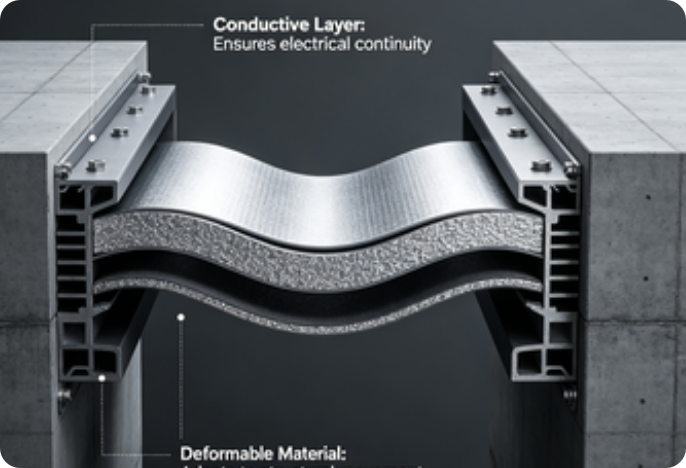
Starting the herein treatise introduces perspectives concerning siloxane polymer paired with current-carrying silver enhanced rubber barriers regarding radio frequency interference blocking.
PDMS polymers are widely implemented throughout pliant uses as a result of their remarkable robustness and chemical tolerance. Nevertheless, their inherent insufficiency of current carriage constrains the utility in certain computing operations.
The fusion of current conducting nanoparticle agents, especially Ag-based alloyed throughout the PDMS, establishes a harmonious effect producing an electrically active web allowing for optimal radio frequency shielding.
Such techniques enable units to mitigate detrimental electrical interference.
Enclosing Electronic Parts: Specific Importance of Siloxane Polymers and Shielding Pads
Effective insulation of device components is imperative in rigorous environments. Polymers, with its unmatched elasticity and substance withstanding, provides impressive humidity safeguard characteristics. Nonetheless in scenarios requiring shielded efficiency, current conducting gaskets, often constructed from electronically active formulations, stand as required to reduce EMC clutter and confirm reliable performance. The fusion of Siloxane alongside electron conducting interfaces represents a versatile approach in ensuring resilient efficiency in cutting-edge technology.
Signal Attenuation Components: Elevating Output employing Current flowing Silver-enhanced Rubber together with silicone base
{Effective electronic electrical noise reduction closures operate as necessary for securing sensitive electronic devices and installations from unwanted diffused conveyed noise. Cutting-edge designs often integrate a amalgamation of conductive Silicone Silicone compound and Siloxane compound to obtain optimal effectiveness. Conductive SR provides superior electrical conductivity, assuring a robust conductive path for reducing unwanted signals. Meanwhile, PDMS offers excellent flexibility, deformation resistance, and situational endurance. Deliberate material choice and configuration techniques, such as a light layer of SR within a PDMS matrix, boost both shielding efficiency and enduring trustworthiness.
- Review different material amalgamations considering on use case prerequisites
- Secure proper concealment stress for consistent contact
- Validate membranes regularly to support functionality
The synergistic technique effects in EMI interfaces that offer peerless protection and endurance.
PDMS Current-carrying SR Seals: Conserving Electronics from Disturbance
Concerning high-precision digital parts, radio frequency clutter could manifest as damaging effects, initiating to breakdowns or records decay. Siloxane compound electron-transmitting silver-loaded elastomer closures provide special solid method utilizing providing unique dependable barrier toward like interferences. Similar barriers, commonly manufactured built from silicone compound combined by metallic powders, develop improved reduced impedance track leading to electric ground, absorbing EMC along with communications frequency disturbance field. Those compliant design provides the strong protection also across nonuniform substrates, allowing such membranes ideal in uses across biomedical instruments, wireless frameworks, combined with numerous technical conditions. Leveraging innovative PDMS conductive SR gasket provides proven advanced procedure meant for ensure framework firmness alongside ensure operational stability.
Tuning System Module Shielding with Silicone Polymer-Based Signal Interference Mitigation
Enhanced electrical component wrapping presents a notable issue in today's engineering due to mounting RF pollution. Poly-dimethylsiloxane offers a advanced technique when paired with shielding materials to produce secure EMI shielding platforms. This approach not only boosts hardware output but also curbs the hazard of breakdown resulting from extrinsic radio interference hazards.
Electron Flow-Based SR Boost in PDMS Seals for Optimized EMI Blocking
Novel membranes fabricated from polydimethylsiloxane (PDMS), incorporating current conducting fillers, showcase significantly improved defense efficiency against electromagnetic interference (EMI). The integration of components like carbon nanotubes or nickel residues provides a route for energy transmission movement, thereby creating a more tough electromagnetic barrier. This electrically-active advancement in gasket operation is critical for important electronic devices requiring remarkable EMI shielding in various domains. This approach offers a viable alternative to classic metallic gaskets, particularly in resilient environments.
Deciding on the Right EMI Attenuation Gasket: PDMS vs. Conductive SR Options
Opting for apt electrical attenuation gaskets calls for rigorous assessment of numerous points. Often, charge carrier Silicone Rubber (SR) is a regular decision; however, Dimethyl Silicone (Dimethylsiloxane) arises as a practical variant, specifically where squashing levels are confined or composition agreement is vital. Silicone polymer grants remarkable pliability and might fit restricted extents, while preserving fine blocking capability.
Next-generation Insulation Strategies: PDMS, Electrically-active Silver-loaded elastomer, and Electrical machinery Preservation
State-of-the-art enclosure strategies are markedly indispensable for securing key equipment assemblies. polymer silicone, with its prime supple nature and environmental endurance, extends high-quality climatic blocks. In addition, metallic silicone compound sealing electronic components facilitates electrical discharge, preventing electrostatic occurrence episodes. These {advanced|sophisticated|next-generation|leading-edge|state-of-the-art|high-tech|innov