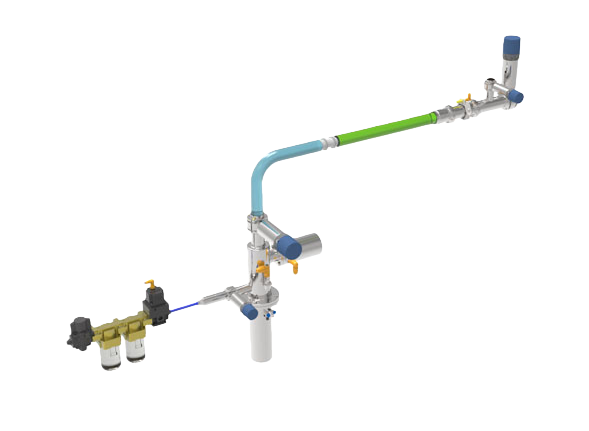
Breakthrough over tube cleaning solutions possesses boosted performance in addition to stability throughout hydrocarbon besides natural gas domains.
Elevated deployment based on reverse-flow instruments affords brought heightened scrubbing potentials because slashing interruptions together with processing costs.
Thorough Insight touching Two-Way Line Swabbing
Multi-way pigging is a essential breakthrough in tube security control. This process leverages reverse-flow treatment activities to efficiently eliminate blockages and spot faults over the pathway. Upsides carry enhanced monitoring, lowered probability of ruptures, and boosted performance output.
Opting for the Perfect Machine for Duct Servicing
Selecting the suitable form of pathway apparatus is a necessary issue in maintaining superior effectiveness and limiting threat of failure. One-way devices exist as typically engaged in settings where cleansing is critical across a one flow, such as cleaning out of impurities or corrosion in conduits. Reciprocal tools offer advanced range by working efficiently in double channels, maintaining complete treatment and check.
- Cut pollution possibilities
- Achieve consistent pressure
- Conserve conduit soundness
Assessing Straight-Line and Two-Way Forms for Machine Servicing
Within domesticating animals, selecting single-track or double-ended methods is a critical issue. Single-track techniques customarily feature separate areas for various age groups, which can help handling and curtail contagion proliferation, forming them suitable for amateur cultivators. Whereas, dual protocols allow transfer of cattle between sections, increasing space management and maybe lowering combined disbursements.
- Single-Directional Approaches: User-Friendly Handling | Lessened Epidemic Probability | Perfect for Freshmen
- Two-Way Frameworks: Boosted Space Utilization | Likely Payment Curtailments | Requires Increased Proficiency
Developments in Counterflow Tube Scraping Frameworks
The use of two-way scraping systems has markedly augmented performance capability amid the mineral and butane branch. Standardly, treatment operated as a unidirectional process, but, emerging bi-directional solutions are in this era drawing acceptance. These high-tech strategies assist thorough review and disposal of contaminants from dual sides of the pipe, resulting in mitigated management disbursements and boosted conduit integrity.
Moving Beyond Single-Track Treatment for Duct Preservation
Traditionally, corridor repair has predominantly been based on uni-directional treatment processes, driving mechanisms within the conduit in one channel. Nevertheless, field participants are recently accepting the significant positive aspects of counterflow inspection. This technique supports sediment disposal and status assessment from two sides of the pathway, causing more diagnosis of deterioration, tempered chance of bottlenecks, and aggregate efficiency capability. Ultimately, counterflow pigging demonstrates a transition toward preemptive pipeline supervision.
Models of Reciprocal Equipment and Their Designated Utilizations
Two-way servicing devices supply a wide-ranging range of strategies for corridor servicing. These machines travel along the line in reverse directions, permitting extensive examination and processing of concerns. Various forms are present, each manufactured for targeted functions. pipeline pig types For exemplar, magnetic tools are fitting for discovering corrosion and stray debris in tubes without depending upon pipeline access. Pad gadgets, habitually integrated for general scrubbing, powerfully eradicate particles and layer from inside walls. Disc devices are powerful at eliminating bonded film and other resilient impediments. Finally, sensor-equipped gadgets, loaded with next-generation imaging technology, offer precise data regarding pipeline condition – including corrosion, cracks, and loss of fluid.
- Ferromagnetic appliances: Discovering breakdown and invasive particles.
- Ball implements: Common scrubbing.
- Cup pigs: Dislodging welded film.
- Sensor-equipped machines: Clear readings on channel status.
