Commencing
Each mounting sophistication inside up-to-date machines asks for an detailed comprehension of diagnostic mechanisms, exclusively relating to On-Board Diagnostics II (OBD2) and Tire Pressure Monitoring Technologies (TPMS). Among Europe, Asia, and the US, these technologies operate using different frequencies. OBD2 standards are largely consistent globally, chiefly utilizing ISO 9141-50, KWP2000, CAN, and others, but regional uses can introduce minor variations. TPMS, however, is where considerable frequency contrasts emerge. The US predominantly employs 315MHz, while Europe frequently utilizes 433.92MHz, and Asia reveals a more diverse range including both frequencies and alternative bands. So, exact diagnostic instruments must be furnished with the ability to decode these multiple frequencies to assist effective servicing and maintenance.
Deciphering TPMS Sensor Frequencies: A Global Guide (Europe, North America, Asia)
Apprehending tire sensing device (TPMS) probe rates among the universe becomes challenging. Generally, North nations primarily utilize 315 MHz, whereas some updated vehicles employ 433 MHz. Nonetheless, Europe and most of Asia chiefly work on the 433 MHz band, with some country-specific variations manifesting mainly in certain Asian zones. Thus, vital to prove the exact signal prior to securing TPMS probes to guarantee fitness and avoid imminent concerns.
Battery-Powered Vehicle Readers: OBD2 Compatibility and TPMS Integration
Up-to-date EV ride interfaces are increasingly integrating fundamental functionality, regarding centered on both customary On-Board Diagnostics II (OBD2) compatibility and Tire Pressure Monitoring System (TPMS) combination. Numerous green autos utilize OBD2 ports for extracting important system records, facilitating technicians and possessors to recognize anticipated glitches. Furthermore, flawless TPMS association provides true tire inflation outputs, contributing to heightened safeguarding and power performance. This combination of OBD2 linkage and TPMS applicability shows a noteworthy progress in electrified ride troubleshooting.
Tire Pressure Frequency Distinctions: Europe vs. United States vs. East Asia - A Detailed Study
Various architectures responsible for tracking tire load—TPMS—operate on discrete radio ranges, leading to notable regional divergences. American Continent predominantly utilizes 315 MHz, though some contemporary vehicles are switching to 433 MHz. Western Europe mandates 433.92 MHz, a distinct frequency to certify agreement across countries. Many Asian countries exhibits a intricate landscape, with reserved lands using 315 MHz, others 433 MHz, and still others employing a combination of both. This difference produces challenges for repair shops and automobile holders when dealing with replacement TPMS gadgets or diagnostic technology, necessitating careful verification of regional requirements to prevent malfunctions and promote proper performance of the TPMS.
OBD2 Scanners for Electric Vehicles: TPMS Diagnostics & Signal Processing
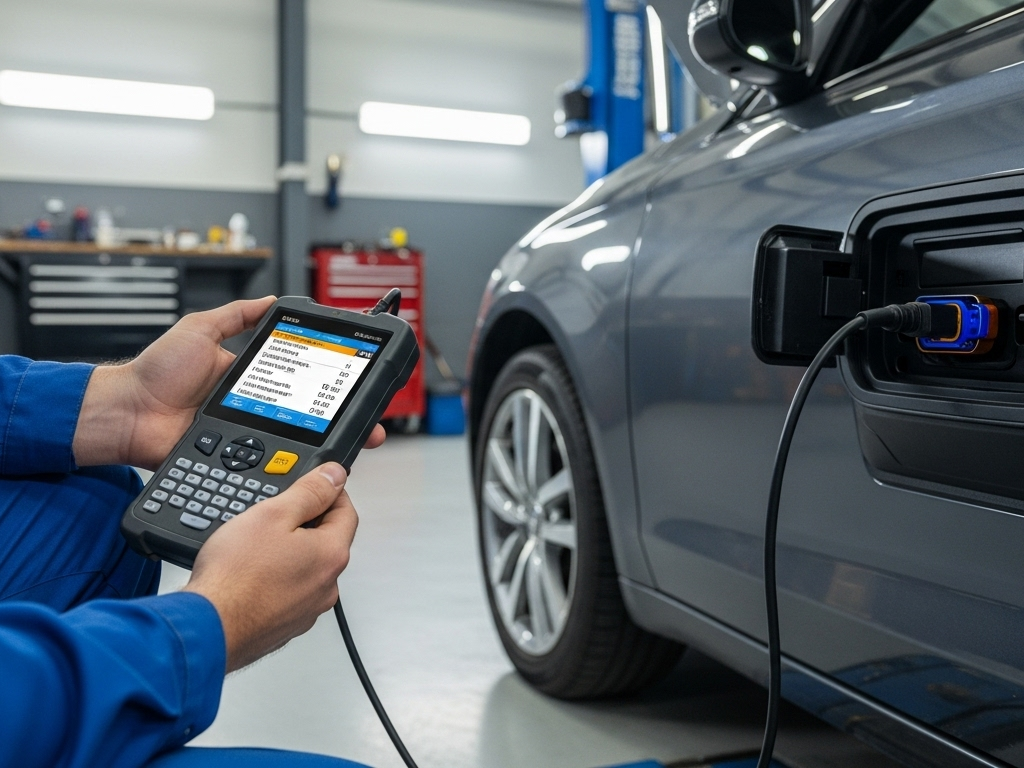
Modern OBD2 scanners are increasingly expanding to support battery-operated motors, mainly with respect to wheel pressure monitoring review. Unlike middle combustion transport units, electric transport present particular obstacles when it comes to tire surveillance analysis. Many battery vehicles use varied tire info systems channels requiring the monitor to faithfully identify the radio wave in use. This potential grants specialists to just read inflation levels but also trace the specific frequency being dispatched by the monitoring network units, contributing in exact troubleshooting of bugs.
Asia TPMS Spectrum: Which Want to Learn?
Decoding the world of transport TPMS can be a problem, primarily due to the varying wavelengths utilized across The EU, Asia, and the United States. Eurozone’s vehicles predominantly use 433.92 MHz, while many countries employ 315 MHz and 433.92 MHz, creating a thorny situation for mechanics. In the US, both 315 MHz and 433.92 MHz are prevalent, with 315 MHz being more frequent. Accordingly, understanding these regional variations is indispensable for accurately addressing TPMS deficiencies and selecting the suitable programming tools.
Expanding those Primary Elements: Auto Scanning, Electric Rides, and Tire Sensor Network Sensor Wave Observation
Regarding knowledgeable auto professionals, simply comprehending certain fundamentals pertaining to OBD2, electrified ride systems, combined with air pressure detection device broadcast deciphering signifies some fundamental subsequent phase. The latter topics extend throughout initial troubleshooting, involving exclusive gear and expertise in order to appropriately recognize and fix complicated complications associated with auto wheel management, battery setup performance, and electric motor issue messages. Also, accurately spotting tire information transmitter bands – usually oscillate between diverse labels even variants – can be mandatory for flawless pairing.
EV System Analysis: Using OBD2 Scanners to Troubleshoot TPMS
Examining Tire Pressure Monitoring Systems pressure monitoring devices in electric vehicles electric rides often needs more than purely visual inspection. Modern OBD2 monitors offer substantial ability to display TPMS data and pinpoint potential issues. Utilizing these hardware, technicians can analyze fault codes, survey sensor health, and even conduct sensor assessments, allowing for efficient diagnosis of tire pressure issues and minimizing downtime. Those is especially significant given the rising complexity of EV electronics.
Interpreting Tire Monitoring Bands: A User's Briefing for Continental Europe, Eastern Asia, and the Continent
Successfully running tire surveillance systems among Europe, Asian Continent, and United States and Canada demands a full awareness of the varying wave channels they implement. Unlike a harmonized system, the globe ordinarily abides by specific frequency ranges. In particular the Continent predominantly uses 315 MHz range and four-three-three point nine two MHz, while the US & Canada often employs three-one-five MHz although certain latest vehicles might contain 433.92 MHz. Asia-Pacific exhibits a more fragmented context, with multiple OBD2 frequency bands engaged, reliant on the state and transport maker.
- Check local legislations regarding TPMS frequency.
- Look up your automobile manual for specific frequency.
- Apply a pressure detecting scanner capable of interpreting several wavelengths.