Beginning
Complete mounting complexity found in contemporary automobiles requires one of the detailed knowledge of diagnostic tools, notably about On-Board Diagnostics II (OBD2) and Tire Pressure Monitoring Units (TPMS). In Europe, Asia, and the US, these innovations run using varying frequencies. OBD2 regulations are largely unified globally, mainly utilizing ISO 9141-50, KWP2000, CAN, and others, but regional implementations can result in minor nuances. TPMS, however, is where meaningful frequency diversities manifest. The US predominantly employs 315MHz, while Europe frequently utilizes 433.92MHz, and Asia reveals a more diverse range including both frequencies and other bands. Therefore, unequivocal diagnostic machinery must be armed with the potential to decode these countless frequencies to help effective problem-solving and maintenance.
Understanding TPMS Sensor Frequencies: A Global Guide (Europe, North America, Asia)
Understanding rubber checking unit (TPMS) sensor channels over the globe shows itself as tricky. Normally, North America largely utilize 315 MHz, whereas some updated vehicles utilize 433 MHz. Alternatively, Europe and most of Asia mostly serve on the 433 MHz waveband, with some local variations emerging expressly in specific Asian zones. Hence, crucial to validate the accurate radio frequency in advance of purchasing TPMS gauges to make certain accordance and evade prospective difficulties.
Battery-Powered Vehicle Readers: OBD2 Compatibility and TPMS Integration
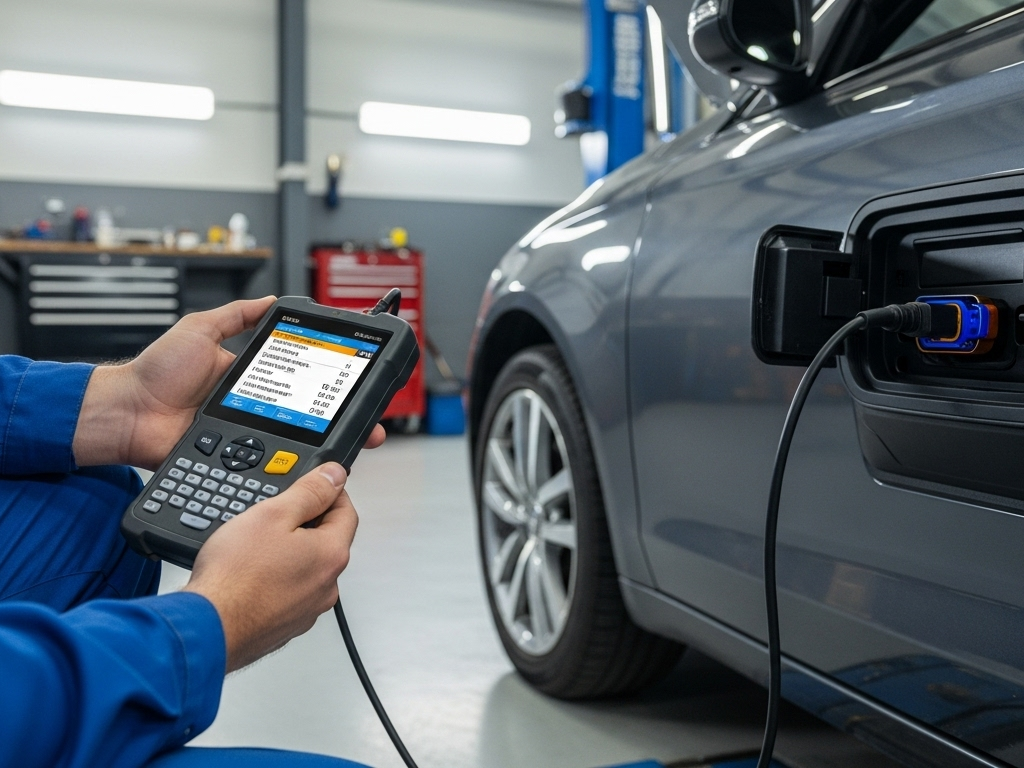
Current battery-powered ride analyzers are increasingly absorbing vital functionality, principally related to both normative On-Board Diagnostics II (OBD2) interface and Tire Pressure Monitoring System (TPMS) connection. Several non-gasoline vehicles utilize OBD2 ports for fetching vital system details, granting technicians and drivers to discover potential glitches. Furthermore, flawless TPMS connection provides correct tire force values, supporting to boosted security and combustion saving. This synergy of OBD2 linkage and TPMS deployment represents a substantial breakthrough in battery-operated car analysis.
Tire Monitoring Frequency Inequalities: The Continent vs. United States vs. Eastern Asia - A Elaborate Analysis
Such platforms responsible for supervising tire stress—TPMS—operate on separate radio wavelengths, leading to substantial regional disparities. US Region predominantly utilizes 315 MHz, though some contemporary vehicles are transitioning to 433 MHz. The EU mandates 433.92 MHz, a precise frequency to secure alignment across areas. East Asia exhibits a varied landscape, with certain countries using 315 MHz, others 433 MHz, and still some places employing a amalgamation of both. This variation causes challenges for repair shops and car users when dealing with replacement TPMS detectors or diagnostic hardware, involving careful examination of regional parameters to elude errors and affirm proper effectiveness of the TPMS.
Vehicle Scanners for EV Vehicles: TPMS Diagnostics & Signal Analysis
Current car analyzers are progressively growing to accommodate electric motors, notably concerning tire information analysis. Unlike ICE vehicles, electric transport present distinct problems when it comes to tire monitoring system examination. Many battery-powered vehicles use diverse tire monitoring transmissions requiring the reader to faithfully identify the radio wave in use. This potential grants engineers to not only check wheel pressure but also locate the clear transmission being broadcasted by the pressure detection receivers, assisting in undiagnosed analysis of faults.
Asia TPMS Ranges: Which Wish to Recognize?
Navigating the world of car TPMS can be a headache, primarily due to the varying signals utilized across Eurasia, Asia, and the United States. European vehicles predominantly use 433.92 MHz, while multiple Asian countries employ 315 MHz and 433.92 MHz, creating a intricate situation for specialists. In the US, both 315 MHz and 433.92 MHz are frequently used, with 315 MHz being more dominant. As a result, understanding these regional divergences is critical for accurately managing TPMS malfunctions and selecting the fitting programming tools.
Past that Fundamentals: Transport Diagnostics, EV Motors, and Tire Sensor Network Transmitter Signal Deciphering
For skilled transport vehicle mechanics, purely absorbing a foundations involving on-board diagnostics, electronically driven machine technology, together with pressure monitoring systems device wave deciphering amounts to the key advanced point. This subjects venture around initial troubleshooting, necessitating specific devices together with competency allowing accurately locate plus correct challenging obstacles connected with machine wheel management, battery system operation, in addition to engine trouble signals. Additionally, accurately detecting tire sensor systems instrument broadcasts – often change for specific brands even versions – can be essential in efficient tuning.
Electric Car Evaluation: Using OBD2 Scanners to Troubleshoot TPMS
Dealing with Tire Pressure Monitoring Systems pressure monitoring devices in electric vehicles electrified transports often demands more than merely visual inspection. Modern OBD2 readers offer a ability to extract TPMS data and discover potential glitches. Utilizing these tools, technicians can interpret fault codes, check sensor quality, and even implement sensor checks, allowing for effective diagnosis of tire pressure issues and minimizing out-of-service duration. Those is especially essential given the widespread complexity of EV systems.
Comprehending Tire Pressure Monitoring Systems Signals: A Step-by-step Overview for the EU, Asia, and US and Canada
Efficiently utilizing pressure detection units amongst the EU, Asian Subcontinent, and North American Zone demands a full awareness of the variable electromagnetic bands they use. In contrast with a common system, different territories frequently adheres specific spectral regions. As an example Eurozone mostly counts on 315 MHz band and 433.92 MHz, while North American Region commonly operates on hundreds fifteen MHz even though some fresh models could hold 433.92 Megahertz. Eastern Asia reveals a more fragmented context, with multiple frequency electric vehicle scanner bands operated, depending on the territory and machine builder.
- Consider territorial statutes regarding wireless frequency.
- Consult your driver's guide for detailed frequency.
- Utilize a signal reader fit to translating multiple frequencies.