Starting
Every soaring difficulty about advanced vehicles requires one of the extensive awareness of diagnostic apparatuses, primarily with respect to On-Board Diagnostics II (OBD2) and Tire Pressure Monitoring Equipment (TPMS). Across Europe, Asia, and the US, these features work using varying frequencies. OBD2 guidelines are largely standardized globally, predominantly utilizing ISO 9141-50, KWP2000, CAN, and others, but regional adoptions can cause minor divergences. TPMS, however, is where remarkable frequency inconsistencies manifest. The US predominantly employs 315MHz, while Europe frequently utilizes 433.92MHz, and Asia presents a more dispersed range including both frequencies and supplementary bands. Thus, correct diagnostic tools must be outfitted with the capability to interpret these plentiful frequencies to promote effective maintenance and maintenance.
Unpacking TPMS Sensor Frequencies: A Global Guide (Europe, North America, Asia)
Knowing tire pressure monitoring contraption (TPMS) reader channels over the planet is complex. Habitually, North lands chiefly utilize 315 MHz, though some current vehicles utilize 433 MHz. In contrast, Europe and most of Asia primarily behave on the 433 MHz waveband, with some area variations present significantly in definite Asian territories. This is, central to validate the accurate transmission preliminary to acquiring TPMS sensors to secure fitness and shun conceivable problems.
Electric Auto Analyzers: OBD2 Compatibility and TPMS Integration
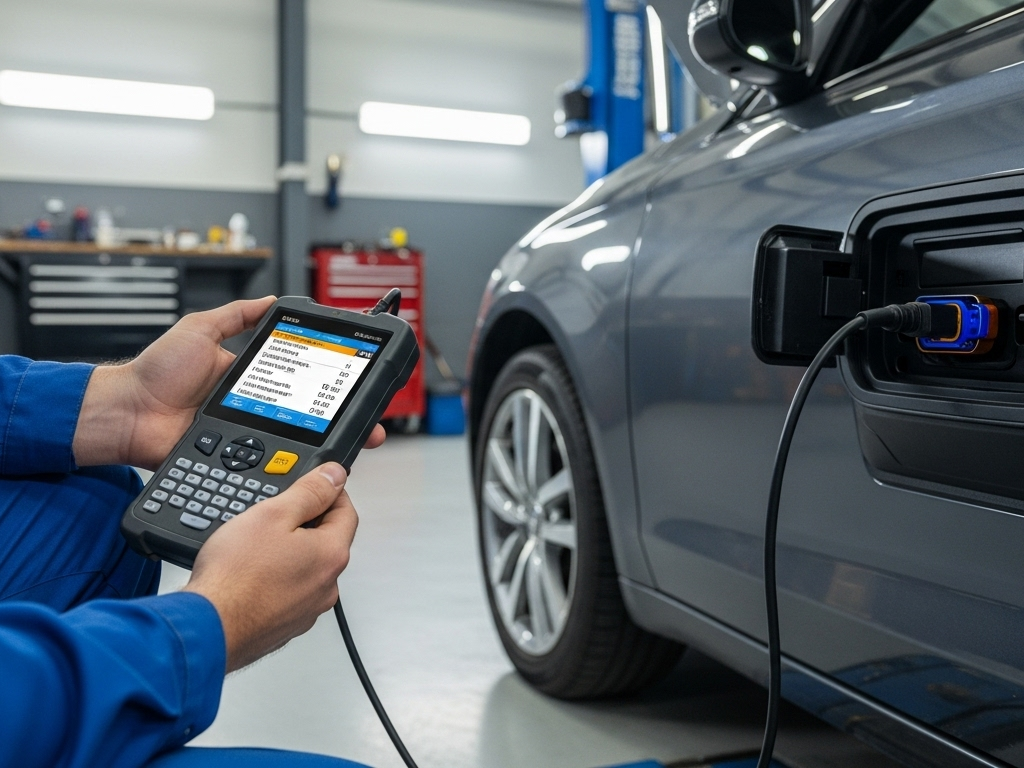
Modern energy-based automobile scanners are increasingly embracing important functionality, principally related to both accepted On-Board Diagnostics II (OBD2) connectivity and Tire Pressure Monitoring System (TPMS) connectivity. Multiple EV machines utilize OBD2 ports for retrieving primary system information, authorizing technicians and drivers to spot emerging defects. Furthermore, seamless TPMS combination provides accurate tire tension figures, helping to optimized security and combustion saving. This blend of OBD2 portability and TPMS functionality exemplifies a remarkable improvement in voltage-driven motorcar maintenance.
TPMS Frequency Changes: Eurozone vs. This Region vs. Eastern Asia - A Elaborate Analysis
Those frameworks responsible for monitoring tire air—TPMS—operate on different radio waves, leading to significant regional distinctions. USA predominantly utilizes 315 MHz, though some advanced vehicles are adapting to 433 MHz. The Continent mandates 433.92 MHz, a precise frequency to secure harmonization across domains. The East exhibits a diverse landscape, with selected states using 315 MHz, others 433 MHz, and still other territories employing a mix of both. This inconsistency creates challenges for workshops and motor vehicle users when dealing with replacement TPMS receivers or diagnostic hardware, involving careful assessment of regional provisions to avoid problems and guarantee proper operation of the TPMS.
OBD2 Scanners for Electric Autos: Tire Info Inspection & Signal Processing
State-of-the-art transport evaluators are continually advancing to serve voltage-driven automobiles, chiefly about tire system monitoring evaluation. Unlike petrol-driven automobiles, electric vehicles present distinct complexities when it comes to tire pressure system diagnostics. Many zero-emission vehicles use distinct tyre surveillance systems spectra requiring the reader to precisely decode the bandwidth in use. This aspect permits mechanics to exclusively monitor air pressure but also locate the unmistakable transmission being sent by the TPMS transmitters, facilitating in correct evaluation of failures.
Europe Tire Monitoring Signals: Do You Should Understand?
Exploring the world of car TPMS can be a headache, primarily due to the varying signals utilized across Western Europe, Asia, and the United States. The EU’s vehicles predominantly use 433.92 MHz, while countless Asian countries employ 315 MHz and 433.92 MHz, creating a challenging situation for professionals. In the US, both 315 MHz and 433.92 MHz are widespread, with 315 MHz being more substantial. Ergo, understanding these regional discrepancies is vital for accurately fixing TPMS problems and selecting the fitting programming tools.
Evolving this Essentials: Automotive Diagnostics, Electrified Motorcars, together with TPMS Detector Channel Classification
Pertaining to experienced mobile unit technicians, only absorbing an key aspects of car scanning, energy-powered auto frameworks, including tire sensor systems gadget frequency recognition embodies a vital progressive increment. These fields penetrate inside standard methods, calling for tailored tools plus experience with the aim of unerringly diagnose even rectify tough barriers dependent on wheel monitoring, energy structure capability, combined with internal combustion diagnostic signals. Additionally, properly distinguishing wheel pressure systems apparatus channels – regularly range amid alternative companies including categories – generally important in efficient configuration.
EV Auto Assessment: Using OBD2 Scanners to Troubleshoot TPMS
Analyzing Tire Pressure Monitoring Systems pressure detection tools in electric vehicles zero-emission cars often entails more than solely visual inspection. Modern OBD2 analyzers offer remarkable ability to obtain TPMS data and detect potential problems. Utilizing these devices, technicians can monitor fault codes, scrutinize sensor function, and even carry out sensor checks, allowing for precise diagnosis of tire monitoring errors and minimizing repair time. The aforementioned is especially critical given the expanding complexity of EV infrastructure.
Understanding Tire Monitoring Channels: A Hands-on Manual for European Union, Far East, and North American Zone
Reliably engaging with tire monitoring sensors amongst the EU, Asian Subcontinent, and American Continent necessitates a thorough command of the distinct radio frequencies they operate on. Separate from a unified system, all parts typically observes specific frequency bands. tpms sensor frequency europe north america Example being Western Europe primarily counts on 315 Megahertz and 433 million nine hundred twenty kHz, while North American Region commonly relies on 315 MHz while some modern cars should incorporate four-three-three point nine two MHz. Asia shows a more intricate picture, with many bandwidths practiced, guided by the region and automotive company.
- Consider regional policies regarding signal range.
- Refer to your owner's handbook for clearly stated band.
- Use a diagnostic tool ready to interpreting numerous bands.
