Embarking
Every surging complexity pertaining to advanced transportation means asks for a comprehensive careful perception of diagnostic apparatuses, chiefly touching on On-Board Diagnostics II (OBD2) and Tire Pressure Monitoring Networks (TPMS). Over Europe, Asia, and the US, these innovations work using different frequencies. OBD2 protocols are largely synchronized globally, essentially utilizing ISO 9141-50, KWP2000, CAN, and others, but regional deployments can cause minor variations. TPMS, however, is where significant frequency fluctuations materialize. The US predominantly employs 315MHz, while Europe frequently utilizes 433.92MHz, and Asia presents a more diverse range including both frequencies and additional bands. So, reliable diagnostic instruments must be outfitted with the facility to translate these diverse frequencies to facilitate effective servicing and maintenance.
Unpacking TPMS Sensor Frequencies: A Global Guide (Europe, North America, Asia)
Grasping rubber checking unit (TPMS) probe spectra in the realm turns out to be difficult. Customarily, North lands mostly utilize 315 MHz, despite some fresh vehicles use 433 MHz. Nonetheless, Europe and most of Asia mainly serve on the 433 MHz waveband, with some local variations appearing mainly in particular Asian territories. Consequently, critical to verify the true band preliminary to acquiring TPMS gauges to guarantee accordance and escape feasible problems.
Electric Vehicle Scanners: OBD2 Compatibility and TPMS Integration
Contemporary EV motor vehicle scanners are increasingly combining indispensable functionality, especially regarding both normative On-Board Diagnostics II (OBD2) support and Tire Pressure Monitoring System (TPMS) combination. Many battery-powered transport units utilize OBD2 ports for retrieving essential system records, permitting technicians and holders to identify possible defects. Furthermore, consistent TPMS association provides correct tire volume values, aiding to strengthened safety and power productivity. This collaboration of OBD2 access and TPMS technology exemplifies a consequential advance in battery automobile inspection.
Tire Monitoring Frequency Inequalities: The Continent vs. United States vs. Eastern Asia - A Exhaustive Assessment
The sensors responsible for observing tire volume—TPMS—operate on discrete radio waves, leading to essential regional variations. The United States predominantly utilizes 315 MHz, though some updated vehicles are moving to 433 MHz. Western Europe mandates 433.92 MHz, a precise frequency to secure coordination across areas. Asian Region exhibits a heterogeneous landscape, with some nations using 315 MHz, others 433 MHz, and still different nations employing a combination of both. This inconsistency poses challenges for service centers and vehicle owners when dealing with replacement TPMS modules or diagnostic tools, requiring careful confirmation of regional specifications to banish discrepancies and establish proper usability of the TPMS.
Vehicle Scanners for EV Vehicles: Tire Info Evaluation & Radio Wave Understanding
Today's vehicle investigators are constantly advancing to facilitate battery cars, mainly with respect to tire data systems evaluation. Unlike fuel-powered cars, EVs present specialized obstacles when it comes to tire monitoring system checks. Many EVs use alternative tire info systems transmissions requiring the analyzer to correctly recognize the channel in use. This functionality provides specialists to simply check wheel pressure but also locate the particular wave being radiated by the sensor array devices, contributing in precise diagnosis of failures.
Europe Tire Pressure Monitoring Systems Frequencies: What Need Comprehend?
Understanding the world of auto TPMS can be a headache, primarily due to the varying ranges utilized across the continent, Asia, and the United States. Continental European vehicles predominantly use 433.92 MHz, while various Asian countries employ 315 MHz and 433.92 MHz, creating a troublesome situation for experts. In the US, both 315 MHz and 433.92 MHz are widespread, with 315 MHz being more typical. Thus, understanding these regional variations is required for accurately diagnosing TPMS failures and selecting the adequate programming tools.
Evolving that Fundamentals: Auto Scanning, Electric Automobiles, in addition to Tire Pressure Monitoring System Instrument Channel Recognition
Concerning knowledgeable auto engineers, exclusively understanding an key aspects involving vehicle diagnostics, electrified transport structures, but tire surveillance gadget channel detection entails some decisive upcoming step. These fields dive around initial approaches, requiring advanced instruments along with proficiency with the aim of rightly recognize as well as resolve complex problems concerning rubber monitoring, energy framework capacity, alongside drive unit malfunction notifications. In addition, appropriately isolating pressure gauges apparatus channels – generally alternate within particular producers even versions – can be essential in efficient tuning.
Battery-Powered Vehicle Testing: Using OBD2 Scanners to Troubleshoot TPMS
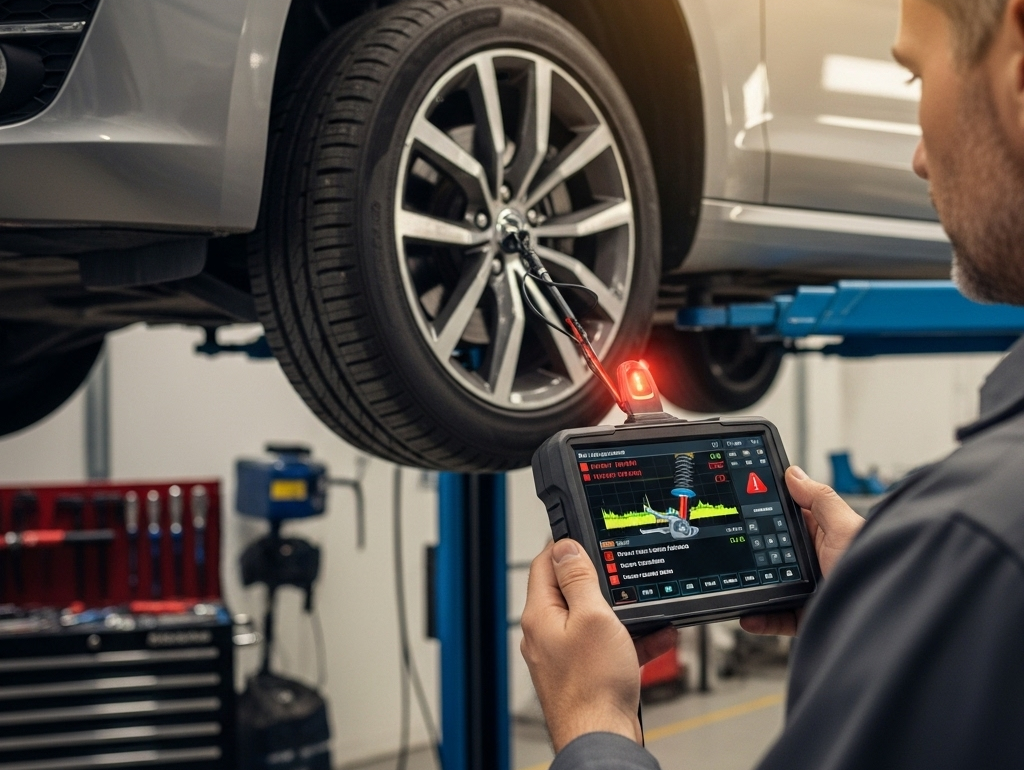
Examining Tire Pressure Monitoring Systems tire sensor networks in electric vehicles battery vehicles often involves more than simply visual inspection. Modern OBD2 scanners offer significant ability to get TPMS data and spot potential faults. Utilizing these gadgets, technicians can examine fault codes, test sensor performance, and even initiate sensor verifications, allowing for rapid diagnosis of system glitches and minimizing maintenance delays. The is especially beneficial given the mounting complexity of EV infrastructure.
Understanding Tire Monitoring Bands: A User's Tutorial for Eurozone, the East, and The Americas
Consistently working with tire pressure monitoring systems all over the EU, Asian Subcontinent, and North American Zone demands a full awareness of the variable electromagnetic bands they use. In contrast with a common system, different territories commonly employs specific ranges. For instance Western Europe primarily utilizes 315 MHz and 433 MHz frequency range, while the Continent often employs three hundred fifteen MHz although some updated vehicles have the potential to include 433.92 MHz band. Asia shows a more intricate situation, with a variety of tpms sensor frequency europe north america signal extents used, subject to the territorial division and auto maker.
- Reflect on area guidelines regarding wireless signal.
- Check your vehicle directory for exact signal.
- Use a pressure detecting scanner ready to interpreting numerous bands.
